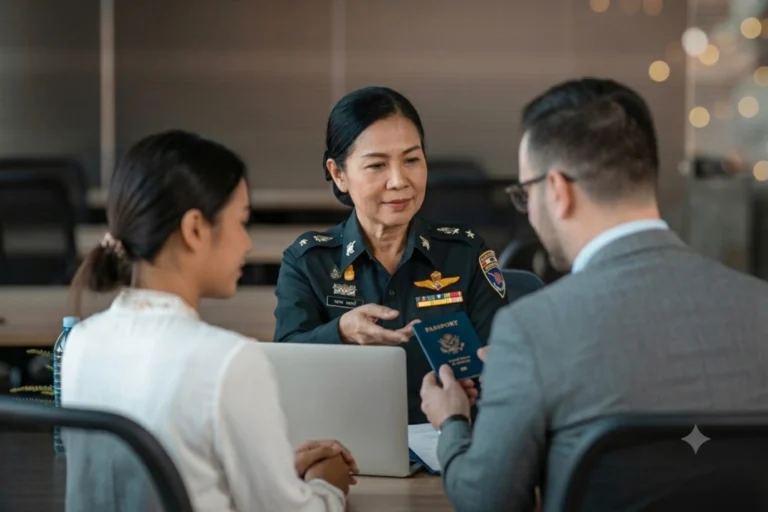

Can foreigners buy property in Thailand? Foreigners can own condos freehold within the 49% quota, while land is typically accessed through leasehold or structured rights. The main risks come from nominee arrangements and poor due diligence.
Introduction
Can foreigners buy property in Thailand? Yes, but foreign ownership is subject to strict restrictions and the actual ability to own property depends on what type of property you want to buy. Many foreign investors are told that foreigners cannot own land in Thailand and assume that means property ownership is not possible.
In practice, a foreigner can buy property in Thailand in several legal ways. Foreign buyers can own condominium units in their own name (subject to certain requirements), own buildings separately from the land beneath them and register long-term leasehold rights.
This guide explains what real estate and property foreigners can buy, what they cannot buy, which structures are commonly used, and what has changed in 2026. It also highlights the issues many foreign buyers encounter.
At the Belaws platform, our team focuses on identifying the best ownership structure for each buyer’s needs, budget, and long-term plans in Thailand.
Key Points
- Foreigners can buy property in Thailand, but only under specific conditions
- Freehold condo ownership (within the 49% quota) is the easiest and safest option
- Foreigners cannot directly own land, but can use leasehold or structured rights
- Nominee shareholder structures are illegal and high risk in 2026
- The most important step is choosing the right ownership structure before signing anything
What Does Thai Law Actually Say About Foreigners and Property?
Under Thailand’s Land Code Act B.E. 2497 (1954), foreign nationals are generally not permitted to own land in their own name. However, this does not mean that foreigners cannot acquire property in Thailand altogether.
Under the Condominium Act, foreigners can own condominium units freehold in their own name, subject to the foreign ownership quota. As per the foreign quota, 49% of the total saleable floor area may be owned by a foreign, but the remaining 51% must stay under Thai ownership.
Purchasing a condominium remains the most straightforward way for a foreign national to own property in Thailand. Since 2022, foreign ownership of condos has steadily increased, with 4,203 units purchased in 2022, rising to 5,036 in 2023, 5,748 in 2024, and 6,160 in 2025 in Bangkok alone.
Thai law also provides alternative ways for foreigners to hold property rights without direct land ownership. These include long-term leasehold rights over land, superficies rights that allow a person to own a physical building on another person’s land, and usufruct rights that allow a person to use and benefit from land for life or for a defined term. These rights are established under the Civil and Commercial Code and must be formally registered at the Land Office to be legally recognised.
What Can Foreigners Actually Buy in Thailand?
While foreign ownership of land is restricted in Thailand, there are still a number of practical and legal options available, including:
Condominiums: the only fully freehold option
Foreigners can acquire property in Thailand on a freehold basis when purchasing a condominium unit, provided the project remains within its foreign ownership quota.
Thai law states that foreigners may only own 49% of a single condo development. Essentially, this means that foreign ownership in the development cannot exceed 49% of the total area of all condo units.
If you are interested in buying a condo, it is best to check with the development’s jurisdiction office and make sure the building has not reached the foreign ownership quota. There are however, no restrictions on the number of condominium units that a foreigner can buy (as long as the foreign ownership quota hasn’t been exceeded).
In this case, the buyer’s name is registered directly on the title deed (Chanote), making condominiums the only fully freehold ownership option available to foreign nationals in Thailand. You can find a full walkthrough in our guide to buying a condo in Thailand.
Houses and villas: building yes, land no
While foreign nationals cannot own actual land in Thailand, they can buy and own a physical building or house structure on the land. In practical terms, that means a foreign buyer may own the villa or house as a building while leasing the land from the Thai landowner. This is one of the most common answers when people ask, can foreigners buy a house in Thailand?
The Right of Superficies
The right of superficies is where the ownership of the building has been legally separated from the land. The right of superficies can be used when a house or building has been built upon a piece of land you do not own.
The right of superficies establishes a registered right to use the land and to own the structures you build upon that land and allows the beneficiary the right to build upon a piece of land without needing to obtain any ownership rights over the land itself.
A right of superficies can be granted for:
- a period of up to 30-years or;
- for the life of the owner of the land or;
- for the life of the beneficiary.
The right of superficies (for a specified term) is a transferable and inheritable interest in land, this means should the land be sold or the owner dies, the right of superficies will be transferred to the new owner. However, once the right of superficies expires, the owner of the land can sell or take any of the structures on the land as long as they leave the land in its original condition.
The Right of Habitation
The right of habitation does not offer any ownership rights, but rather focuses on the right to live in a house. The right of habitation allows the beneficiary the right to live in the property and is not required to pay rent to the grantor.
The right of habitation can be granted for:
- a period of up to 30-years or
- for the life of the owner of the land or
- for the life of the beneficiary.
Please note, that if the beneficiary of the right of habitation starts to make rental payments, the matter becomes that of a tenancy, and the right to habitation is lost.
Land: leasehold is the standard route
Because foreigners cannot own land directly, many choose long-term leases to secure property rights. In Thailand, the maximum legal lease term is 30 years and any lease longer than 3 years must be registered at the Land Office. Under Section 540 of the Civil and Commercial Code, any agreement exceeding this limit is automatically reduced to 30 years.
Lease renewals are possible, but they must be agreed and documented separately. In Thailand, lease renewal is not automatic, and parties must take action to renew the lease toward the end of the initial term. Renewal periods can be up to 30 years, and the renewal’s success will depend on the careful drafting of the clause regarding the intention to renew.
While the agreed term in the lease is considered a real right of the lessee under Thai law and Supreme Court rulings, an option to renew the lease is considered a contract option or obligation that must be enforced in the future. It is advisable to consult with a lawyer regarding renewal clauses to ensure the best possible outcome.
Because the maximum term is 30 years, the only way to keep an interest in the land over the long term is to renew the lease, and the way the renewal is structured is what matters most. An option to renew is only a contractual obligation on the landowner, not a real right attached to the land, so it cannot be relied on with certainty at the end of the term.
In practice, we secure a registered 30-year lease together with a renewal undertaking from the landowner, with the renewal price agreed in advance, as a renewal needs a defined price to be enforceable. The lease does not have to run its full course before it is renewed. It can be renewed early, for example after five years, for a fresh 30-year term.
Because the building can be held in the foreigner’s own name, the structure should also include a resale option under which the landowner undertakes to grant a new 30-year lease to a purchaser nominated by the foreigner. This requires the landowner’s cooperation, but where the compensation is properly built in, it remains the safest available solution. We explain the details further in our guide to lease agreements in Thailand.
A growing number of development projects are now structured so that the foreign buyer takes the land on a lease and holds the building in their own name. These projects need particularly careful review, because the lease offered to buyers is often a sub-lease that sits beneath a master-lease registered between the developer and the landowner. Where that is the case, your rights depend entirely on the master-lease. In some projects the developer does not pay the full lease amount up front and instead relies on the rent collected from sub-lessees to service the master-lease.
If the developer fails or becomes insolvent in five, ten or fifteen years, the master-lease can be lost and the sub-lessees can lose everything. For this reason, detailed due diligence on the master-lease terms is essential before committing to any such project. In other cases the structure provides for an assignment of the lease, which gives the buyer a direct right against the landowner. Where it is available, this is a more secure alternative and should be preferred.
Usufructs
A Usufruct is an instrument that grants a right of use and allows the holder to obtain a limited amount of control over another person’s immovable property.
An usufruct transfers possession, use and enjoyment of land from the owner to the beneficiary of the usufruct. It is important to note that a usufruct can only be registered over properly titled as immovable property and must be registered at the local land office.
An usufruct can provide the following protections for a foreigner owning property on leased land in Thailand:
Usage Rights
The usufruct provides the foreign owner with the right to use and derive benefits from the property, even though they may not own the land itself. This legal right ensures that the foreigner can use the property as if they were the owner during the specified period.
Security and Control
By using a usufruct, the foreign owner gains a level of security and control over the property. Usufructs safeguard the beneficiaries interests and usage rights, preventing unauthorized actions or disposals of the property without the usufruct holder’s consent.
Usufructs are also transferable or inheritable, allowing the foreign owner to pass on these rights to another party. This flexibility increases the property’s value and may facilitate estate planning for the foreign owner.
Usufructs also do not prevent the sale of the property by the owner. However, upon the sale of the property, the usufruct nor the rights included are terminated and will be transferred to the new owner.
In Thailand usufructs can be granted for:
- a period of up to 30-years or;
- for the life of the owner of the land or;
- for the life of the beneficiary.
An important consideration is that in practice, registering an Usufruct with the land office can be difficult. However, if the foreigner is married to a Thai national, registration is a lot easier to achieve.
In practice, whether a usufruct can be registered depends heavily on the individual Land Office, so it should always be checked in advance. Many Land Offices will only register a usufruct in favour of a foreigner in limited circumstances, typically where the foreigner is married to a Thai national and the foreign spouse provided the main investment in the property. Because of this reluctance, the usufruct is a useful tool in theory but is rarely the structure that works best in practice for foreign buyers. For most buyers, a properly drafted registered lease remains the more reliable route.
How Does the Property Purchase Process Work? (Step-by-Step)
When purchasing property in Thailand, the timeline for completing the transaction can vary depending on the type of property, the structure of the transaction, and whether there are any issues uncovered by the due diligence process etc.
Initial consultation and structure identification
It is recommended to begin with an initial consultation with Belaws’ team of experts, where the proposed transaction is reviewed and the appropriate ownership structure is identified. This includes a preliminary assessment of whether the property can legally be acquired by a foreign buyer, along with practical guidance on key requirements such as remitting funds from abroad and obtaining the necessary foreign exchange (FET) documentation to support the purchase.
Due diligence on the property and seller
Due diligence is an important and highly recommended step in any real estate transaction in Thailand. It involves reviewing the property and related documentation to confirm ownership, verify title details, and identify any legal or regulatory risks before proceeding with the purchase.
This process helps buyers assess whether the property can be lawfully acquired, whether there are any encumbrances or restrictions, and whether the terms of the transaction reflect the true position of the asset.
By carrying out proper due diligence, investors can make informed decisions and reduce the risk of complications during transfer and registration.
During the due diligence, your lawyer should also review the property documents to check for any risks. This includes checking the following:
- Land title documents (have land title documents been lawfully issued, who is the current owner and is the land encumbered in any way by endorsements, liens, mortgages, easements or any evidence of a dispute).
- Land size, shape, orientation of the property and its border to public property, such as road, stream or beach (to ensure that the title accurately represents the offered property).
- The legal right of access to the land from a public road location of the land concerning zoning regulations and permitted uses within the area.
- Review Zoning Law for construction. This involves checking and translating the construction permit (if any).
Sale & purchase agreement (and lease drafting if applicable)
The sale and purchase agreement is an important part of any real estate transaction in Thailand, as it determines agreed terms between the buyer and seller. It also establishes key details such as the purchase price, payment schedule, transfer date, and the rights and obligations of each party.
A carefully drafted agreement helps clarify the structure of the transaction and reduce the risk of disputes. It should also consider practical matters such as deposit conditions, default provisions, and any specific requirements linked to foreign ownership, including remittance of funds.
Funds transfer and FET form
When purchasing a condominium in Thailand, the funds used for the transaction are required to to be remitted from abroad in foreign currency. Once the funds have reached the purchaser’s account, a Foreign Exchange Transaction (FET) form must be obtained confirming that foreign currency was transferred into the country and converted to Thai Baht by a licensed Thai bank.
When sending the money to Thailand, it is important to make sure that the purpose for the transfer is properly detailed, as this will be included in the form.
Transfer at the Land Office
Once the funds have been remitted and the FET has been obtained, the transaction is finalised by registering the transfer of ownership at the Land Office.
On the day of transfer at the Land Office, both the buyer and seller must provide a set of supporting documents to complete the registration process.
For foreign buyers, this includes the original passport with visa and entry stamp, the Foreign Exchange Transaction (FET) form, cashier’s cheques for the purchase price and applicable fees, signed copies of the passport, and, where relevant, spouse documentation or a power of attorney if the buyer is not present.
The seller is required to provide the original title deed (Chanote), identification documents, a non-debt certificate (Bai Plod Nee), a foreign ownership quota letter (confirming that the condo falls within the foreign ownership quota), the house registration book (Tabien Baan), and spouse consent where applicable.
In addition to documentation, several taxes and fees apply to the transfer, including a transfer fee of 2% of the appraised value, which is typically split between the parties. Specific Business Tax may apply at 3.3% if the property has been held for less than five years, while stamp duty at 0.5% is charged where SBT does not apply. A withholding tax of 1% of the appraised value is also payable, typically paid by the seller. The 1% rate applies where the seller is a company. Where the seller is an individual, withholding tax is instead calculated on a progressive scale based on the appraised value and the number of years the property has been held, so the effective rate will usually differ from 1%.
How Much Does Buying Property in Thailand Cost a Foreigner in 2026?
Thailand’s real estate market offers a range of opportunities for foreign buyers. However, additional considerations such as legal restrictions, transaction costs, taxes, and ongoing compliance requirements can affect the overall cost and structure of the investment.
At Belaws, during the initial consultation with our team of experts, we provide a clear breakdown of the costs involved and what to expect at each stage of the transaction, allowing you to move forward with confidence.
Examples of fees or costs that are often overlooked by investors include:
Government fees and taxes at transfer
When selling a condominium in Thailand, the transaction will be subject to the following fees and taxes:
Transfer fee
The transfer fee is set at 2% of the appraised value of the property and applies to all real estate transactions.
The transfer fee is usually paid equally between the buyer and the seller, with each party paying 1% of the appraised value.
Specific Business Tax (if applicable)
Specific Business Tax (SBT) applies in certain transactions where the seller is not subject to VAT or where an individual sells a property within five years of the original purchase registration date.
If SBT applicable it is calculated at 3.3% of either the official appraised value or the actual sale price, whichever is higher.
SBT will not apply where the seller has held the property for more than five years.
Certain exemptions may be available in specific circumstances, such as where the property has been used as the seller’s principal residence, transferred by inheritance or will, or transferred without consideration to qualifying parties, including government bodies or certain religious institutions.
Stamp Duty
In Thailand, stamp duty on real estate transactions is charged at 0.5% of the higher of the registered sale price or the official appraised value. Stamp Duty will apply when Specific Business Tax is not payable, most commonly when the seller meets the conditions for SBT exemption.
The duty is payable upon transfer of ownership at the Land Office and is usually borne by the seller, although the allocation can be agreed between the parties as part of the transaction.
Other costs to budget for
Foreign buyers should also budget for translation costs, notarisation in some cases, bank transfer charges, condominium maintenance contributions, annual property tax where relevant, and any ongoing support they may be required, such as Thailand accounting services.
Talk to one of our experts now for more information about how we can help complete your purchase as cost effectively and efficiently as possible.
What Are the Common Mistakes Foreigners Make When Buying Property in Thailand?
When buying property in Thailand, the most common mistakes made by foreign investors tend to be costly, and in many cases entirely avoidable. These issues are often caused by a lack of proper structuring or a limited understanding of the requirements involved in the transaction. We look at these pitfalls in more depth in our guide to the risks of buying property in Thailand.
Using a nominee Thai shareholder structure
One of the popular ways for foreign investors to own land is through a Thai company. While foreign-owned companies are generally not permitted to own land (subject to certain exceptions such as BOI promoted companies), a company with majority Thai shareholding may legally do so. It is important to be clear about what this does and does not allow. Using a Thai company to hold land has sometimes been presented as a grey area, including for purchases on Koh Samui and Koh Phangan, but it is not one. The company route is only lawful where the Thai shareholders are genuine investors. Where they simply hold their shares on behalf of the foreign buyer, the arrangement is a prohibited nominee structure under the Foreign Business Act, and enforcement has become considerably stricter.
However, having a Thai shareholder may also have legal risks, particularly where their role may be viewed as a nominee arrangement. A nominee shareholder is where a Thai partner holds shares on behalf of a foreign investor without genuine financial participation or control. Such arrangements are strictly prohibited under Thai law and have been subject to increased regulatory scrutiny in recent years.
If such a structure is challenged, it can lead to serious consequences, including fines, forced divestment of the property, and potential criminal liability.
If a Thai partner is required, it is important that the structure reflects genuine participation rather than a nominal arrangement. Thai shareholders should invest directly into the company with clear evidence of funds, have a background that aligns with the business activities or their role within the company, and receive dividends where profits are generated. The source of the funds used by the Thai shareholder is a key point. The authorities can ask the Thai partner to evidence it, and banks increasingly trace the beneficial ownership of the structure, so the Thai shareholder should be able to show that the invested funds are genuinely their own and were not provided, directly or indirectly, by the foreign investor.
When the structure is properly implemented with genuine local partners and supported by appropriate documentation, any regulatory review can typically be addressed without further legal consequences.
If you have any concerns about your current structure, or would like to confirm that it is set up correctly, our team can provide a clear and practical review. Get in touch to discuss your situation and explore the options available to you.
Skipping due diligence on the title and the developer
Due diligence is a very important part of any real estate transaction in Thailand and should be completed before committing to a purchase. Due diligence involves reviewing the property and supporting documents to confirm ownership, verify title details, and identify any legal or regulatory risks.
By carrying out proper due diligence, buyers can make informed decisions and reduce the risk of complications during transfer and registration and avoid inheriting potential liabilities or disputes after completion.
Underestimating the FET form requirement
Another commonly misunderstood area is the requirements for funds used by foreign buyers to complete a property purchase in Thailand. In most cases, the purchase funds must be remitted from abroad in foreign currency, with proper documentation, such as a Foreign Exchange Transaction (FET) form, issued by the receiving Thai bank.
This becomes a problem where funds are transferred incorrectly, for example from a local Thai account, in Thai Baht, or without the required documentation. In such cases, the Land Office may refuse to register the transfer, which can delay completion or, in some instances, prevent the transaction from proceeding as planned.
Freehold vs Leasehold in Thailand: Which Option Fits You?
When choosing between freehold and leasehold, the most suitable option will depend on your specific objectives and circumstances.
When freehold (condo) is the right choice
Freehold ownership is often the more suitable option where a foreign buyer wants to completely own the property and hold the title in their own name, particularly when purchasing a condominium within the available foreign ownership quota.
Freehold ownership offers several advantages, including a more straightforward resale process, clearer inheritance planning, and a simpler legal position for foreigners seeking to own property in Thailand.
Freehold ownership also provides a greater level of long-term security, as it is not dependent on lease terms, renewals, or ongoing contractual arrangements.
When leasehold (land + house) is better suited
Leasehold arrangements may be more suitable where a foreign buyer is looking to acquire a larger property such as a villa or land plot. This option is often chosen by those planning a long-term stay and who are comfortable with contractual rights, including agreed renewal terms, rather than absolute ownership. It can also be appropriate where the buyer is prepared to negotiate proper protective clauses such as an Usufruct, within the lease.
If you are unsure which structure best fits your situation, speaking with a Belaws expert can help you assess your options and determine the most suitable approach based on your objectives.
What’s New in 2026? Latest Updates on Foreign Property Ownership in Thailand
The key consideration for 2026 is an increased shift towards stricter enforcement and crackdowns in relation to nominee shareholder arrangements. For foreign investors considering the use of a Thai company to hold land, this could have significant implications.
Recent updates from the Department of Business Development (DBD) announced increased verification of company structures, especially where there are signs of foreign control. This includes greater scrutiny of shareholder arrangements, changes to company directors or authorised signatories. In practice, this means that structures which may have previously gone unchallenged are now more likely to be reviewed.
The rules for setting up a new company with foreign participation have also tightened. Under DBD Order No. 1/2569, which took effect on 1 April 2026, companies with foreign shareholders or a foreign authorised director must file a Confirmation of Investment letter certifying that every shareholder has genuinely invested their own funds and that no nominee arrangement exists. A false declaration carries penalties under Section 36 of the Foreign Business Act, with imprisonment of up to three years and a fine of between THB 100,000 and THB 1,000,000, alongside criminal liability for false statements. For anyone considering a new project structured through a Thai company, this means the structure has to be genuine from the outset, with documented sources of funds for the Thai shareholders.
The risk in relation to real estate arises where a Thai company is set up primarily to hold land on behalf of a foreign investor, without genuine local participation. If Thai shareholders are found to be acting as nominees, holding shares without real financial involvement or decision-making authority, the structure may be deemed non-compliant under Thai law.
The consequences can be serious. Authorities may investigate the structure, impose penalties, and in some cases require the company to be restructured or the property to be sold. This can create uncertainty not just around ownership, but also around the long-term security of the investment.
For this reason, any company structure used in a real estate transaction must be carefully assessed and properly structured. Where a Thai company is involved, it should have a clear business purpose, genuine shareholders, and supporting documentation that reflects the true nature of the arrangement.
A proper, well-structured approach at the outset can reduce exposure to regulatory risk and provide a more stable foundation for property ownership in Thailand. Talk to our experts now for more information.
Why Choose Belaws for Property Ownership Guidance in Thailand?
Belaws is a one-stop platform for legal, corporate, and accounting services in Thailand. Since 2017, we have supported clients from around the world in setting up and managing their businesses and investments, including real estate, in Thailand.
Our team works closely with you to provide clear, practical guidance when considering purchasing real estate in Thailand. We focus on delivering straightforward, relevant advice, helping clients understand what matters in practice rather than relying on complex legal language.
Identification of available 100% foreign ownership structures
One of the most important requirements for many buyers is the possibility to completely own their investment. Our experts review the buyer’s profile against the available investment options, including freehold condo ownership, structured leasehold, usufruct and superficies. Our aim is to tell the buyer what works best for their exact situation, not to push the easiest or quickest solution.
Transparent pricing, no hidden fees
Foreign buyers often have concerns about unexpected drafting costs, tax exposure, and additional charges at completion. At Belaws, we address this with a transparent pricing approach, with no hidden fees and quotes tailored to the specific structure of each transaction.
Our scope of work is clearly defined from the beginning, so you have full visibility on costs and can move forward with confidence.
Frequently Asked Questions About Buying Property in Thailand as a Foreigner
Can foreigners buy a house in Thailand?
Yes, but usually only the building, not the actual land it is built on. In most cases, a foreigner buying property in Thailand can own the house structure and lease the land from the Thai owner. Foreigners can also own condominiums on a freehold basis, provided the development’s foreign ownership quota has not been fully allocated.
Can foreigners buy a condo in Thailand?
Yes. This is the most direct and easiest option foreigners can own property in Thailand. Foreigners can own condominium units freehold in their own name if the building still has space within the 49% foreign quota and the funds used to complete the transaction are properly remitted.
Can foreigners buy land in Thailand?
Usually no. Direct land ownership is restricted for foreigners. For most buyers, long-term leasehold (30 years) is the standard legal route instead.
Can a foreigner own 100% of a property in Thailand in 2026?
Yes, in some cases. A foreigner can own 100% of a condo unit within the foreign quota, or may own a building separately from the land.
What taxes do foreigners pay when buying property in Thailand?
Real estate transactions are subject to applicable transfer costs and taxes, including a transfer fee of 2% of the appraised value (typically shared between the parties), Specific Business Tax at 3.3% where applicable, or alternatively stamp duty at 0.5%, as well as withholding tax on the seller’s income.
What is the foreign quota for condos in Thailand?
The standard foreign quota is 49% of the total saleable floor area of the condominium project. That means a foreigner can buy a condo freehold only if the project still has quota remaining at the time of transfer.
How long does it take to buy a property in Thailand?
A straightforward condo purchase often takes around 4 to 8 weeks, depending on how quickly due diligence, contracts, payment, and Land Office scheduling move. Leasehold or more structured deals can take longer.
What is a leasehold in Thailand and how does it work?
A leasehold gives the tenant the registered right to use land or property for a defined period, up to a maximum of 30 years for land. It does not transfer freehold ownership, but it can still provide a long-term option for foreigners.
What happens to my building if I lose the right to the land?
If you own the building but your right to use the land comes to an end, for example when a lease or a right of superficies expires without being renewed, the building does not automatically lose all value, but your position depends on what the contract provides. Under the Civil and Commercial Code, when a right of superficies ends the landowner may require the structures to be removed, or the parties may agree that the landowner takes the building against payment of a fair value. With a lease, the treatment of the building should be set out in the lease itself. This is why it is important to agree in advance what happens to the building on expiry, including any compensation or buy-out, and to fix the price or valuation method from the outset so that you are not left without protection.
What are the risks of buying in a leasehold or sub-lease project?
In many development projects the lease sold to buyers is a sub-lease that depends on a master-lease between the developer and the landowner. If the developer does not properly fund or service that master-lease, it can be terminated, and the sub-lessees can lose their rights even though they have paid in full. Before buying into such a project, it is essential to carry out due diligence on the master-lease, confirm how it is funded, and check whether the structure allows the lease to be assigned directly by the landowner. In these projects, this review is the single most important protection.
What is the difference between freehold and leasehold in Thailand?
Freehold gives ownership rights over the asset itself, such as a condo unit held in the foreign buyer’s own name. Leasehold gives a right to use the property for a set term, but not full ownership of the land. In Thailand, freehold is simpler for condos, while leasehold is more common for villas and land-based homes.
Can my Thai spouse buy land for me in Thailand?
A Thai spouse can buy land in their own name, but that does not automatically make it the foreign spouse’s land. Thai authorities may require documentation confirming that the funds are the Thai spouse’s separate property and that the foreign spouse has no ownership claim. We explain how this works in our guide to owning land in Thailand with a Thai spouse.
Can a foreigner inherit property in Thailand?
A foreigner can inherit and maintain ownership of a condo. Inheriting land in Thailand is more complex for foreign nationals. Due to ownership restrictions, inherited land generally cannot be held long term and must be disposed of within one year. If the land is not transferred within this timeframe, the Land Office has the authority to arrange the sale on behalf of the owner.
What is a nominee shareholder and why is it illegal in Thailand?
A nominee shareholder is a person who holds shares in name only on behalf of the real foreign owner. In Thailand, using Thai shareholders this way to bypass foreign ownership restrictions can breach the Foreign Business Act.
Do I need a lawyer to buy property in Thailand?
Thai law does not always require a buyer to hire outside legal support, but it is usually recommended to get proper advice and undertake due diligence before completing any transactions.
Can a foreigner get a mortgage in Thailand?
Some foreign buyers can obtain financing, but local mortgage availability is usually more limited for non-Thai nationals than in their home market. Terms depend on the bank, residence status, income profile, and the property itself. Many foreign purchases are still cash-funded.
How do Belaws help foreigners buy property in Thailand?
Belaws team of experts help identify which legal ownership structure actually fits the buyers needs, then supporting due diligence, drafting, and wider Thailand planning where needed. That includes the broader questions many buyers also face, such as whether they need visa support, company advice, or tax guidance..
Getting Started with Buying Property in Thailand
Buying property in Thailand as a foreigner is possible, but the approach needs to be structured carefully from the outset. The legal framework allows for certain types of ownership, but choosing the right structure early on will have a direct impact on both compliance and long-term security.
Foreigners can purchase condominiums on a freehold basis within the 49% foreign ownership quota, while land ownership requires a more structured approach, such as leasehold arrangements. It is also important to be aware that nominee shareholder structures are illegal, and recent enforcement trends mean this is now a real and actively monitored risk. Above all, the most important decision is identifying the right legal structure for your specific situation before signing any agreement or committing funds.
At Belaws, we focus on helping clients navigate these considerations with clear, practical guidance. Since 2017, we have supported clients in structuring their investments and understanding the options available to them, including compliant routes to foreign ownership where possible. Our approach is based on transparency, with clearly defined scopes of work and no hidden fees.
If you are considering purchasing property in Thailand and would like to understand the most suitable structure for your situation, you can speak directly with our team.
You can contact us at https://belaws.com/contact, call us on +66 65 956 8176, or email [email protected].
Our Bangkok-based team typically responds within 24 hours and can assist you in English, French, or Thai.