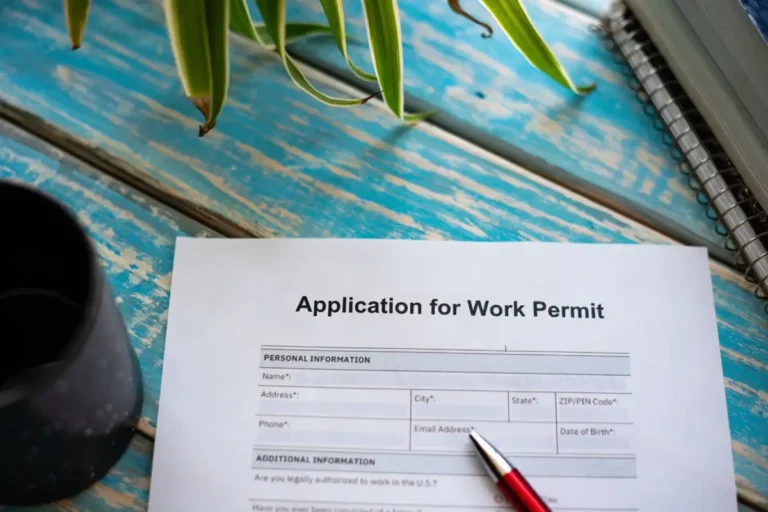
If you are legally married or planning to get married to a Thai national, the marriage visa Thailand provides a practical way to live in Thailand long term without relying on repeated short-stay visas or border runs. Foreign nationals holding a marriage visa are also eligible to work and also benefit from more flexible work permit requirements than other foreign workers.
For many couples, the Thailand marriage visa process can seem complex at first. Understanding the financial requirements, preparing the correct supporting documents, dealing with the Immigration process, and complying with the ongoing renewal requirements can all present challenges. However, with proper preparation and a clear understanding of the requirements, the process is often far more straightforward than many people expect.
Our team of experts help foreign nationals and Thai spouses prepare the right documents, meet financial requirements, arrange appointments, and plan for annual renewals.
This guide explains what the Thailand marriage visa is, who qualifies, what documents are required, how the application process works, what it costs in 2026, and how Belaws can support your application.
Key Points
- The Thailand marriage visa is a Non-Immigrant O visa for foreign nationals legally married to a Thai citizen, allowing long-term stay with annual renewal, though it is not permanent residence.
- Applicants must meet a financial requirement of either THB 400,000 held in a Thai bank account for at least 60 days, or a monthly income of at least THB 40,000 (in practice, a salary of around THB 60,000).
- The process usually starts with a 90-day Non-Immigrant O visa, followed by a one-year extension of stay applied for within Thailand at the Immigration Bureau.
- The visa permits employment, but a separate work permit is required. Marriage visa holders benefit from reduced work permit conditions.
- Ongoing compliance matters throughout the visa’s life, including annual renewals, 90-day address reporting, and re-entry permits before any travel abroad.
What Is the Thailand Marriage Visa and Who Is It For?
The Thailand marriage visa is a Non-Immigrant O Visa for foreign nationals who are legally married to a Thai citizen. It allows the foreign spouse to live in Thailand on a long-stay basis, subject to annual renewal.
This visa is issued under Thailand’s immigration framework, specifically the Immigration Act B.E. 2522 and is administered by the Thai Immigration Bureau. Depending on the context, it may also be referred to as a Thailand marriage visa, Non-Immigrant O visa based on marriage, or a spouse visa for Thailand.
While the marriage visa in Thailand allows the holder to extend their visa every year for as long as they are legally married, it is not considered permanent residence. However, one advantage of the Thailand marriage visa is that it can provide eligibility for a Thai work permit.
Foreign nationals holding a marriage visa benefit from reduced work permit requirements compared to standard business visa holders. For example, the sponsoring company is only required to maintain THB 1 million in registered capital per foreign employee, rather than THB 2 million, and the Thai employee requirement is reduced to two Thai employees per foreign worker rather than four. This can make it easier for eligible applicants to obtain work authorization while living in Thailand with their Thai spouse.
In practice, many applicants first enter Thailand on a 90-day Non-Immigrant O visa. Once in Thailand, they apply for a one-year extension of stay at their local Immigration Bureau office. However, applicants can convert from a tourist visa or certain other visa categories to an initial Non-Immigrant O visa from within Thailand, without needing to leave the country. This is not possible for many other long-term visa categories.
For 2026, the financial requirements remain one of the most important parts of the Thailand marriage visa application. Applicants are usually required to demonstrate either a deposit of at least THB 400,000 in a Thai bank account or a verifiable monthly income of at least THB 40,000 (in practice, a salary of at least THB 60,000 is required).
It is important to plan ahead, as Immigration authorities will review not only the amount of funds available but also how long those funds have been maintained. As part of the application, the required funds may need to have been held in the account for at least two to three months before submission.
Who Is Eligible for a Thailand Marriage Visa?
To qualify for a marriage visa Thailand application, the applicant must be legally married to a Thai citizen. The marriage must be registered with Thai authorities at an Amphoe, or formally recognised through the required legalisation and translation process if the marriage took place outside Thailand.
It is also important to note that there is no minimum period of marriage required before becoming eligible to apply. Once the marriage has been legally registered, applicants can apply for the initial 90-day Non-Immigrant O visa immediately, including on the same day as the marriage registration in appropriate circumstances.
Once the initial 90-day Non-Immigrant O visa has been granted, the applicant may apply for a one-year extension of stay during the final 45 days of their permitted stay, provided all eligibility requirements have been met.
Applicants must also meet the financial threshold. This is usually done by showing THB 400,000 in a Thai bank account in the applicant’s name, held for at least 60 days before filing. Alternatively, applicants may show a monthly income of at least THB 40,000 (in practice, a salary of at least THB 60,000 is required), supported by verifiable bank statements or income records such as their PND 90 or 91 filing.
A clean immigration record is also important. Applicants with overstay history, deportation issues, or previous immigration violations may face closer review.
Who Does Not Qualify
Unregistered partners do not qualify. Thai immigration rules recognise registered marriages, not de facto relationships or common-law partnerships.
Foreign nationals married to another foreign national living in Thailand also do not qualify for this category. The spouse must be a Thai citizen.
Applicants who cannot prove the financial requirement with clear documents may be refused or asked to return with additional evidence. Immigration officers will look closely at bank letters, bank books, income records, and the timing of deposits.
Applicants with a serious immigration history may also face problems, particularly where there has been overstay, visa abuse, or previous refusal.
What Documents Do You Need for a Thailand Marriage Visa?
Before your Immigration Bureau appointment, you should prepare a complete document set. Missing or inconsistent documents are one of the main reasons for rejection or delay.
Applicants should note that the supporting documentation differs depending on whether the application is based on the monthly income method or the THB 400,000 bank deposit method.
Documents required for all applications
- Valid passport with at least 12 months remaining validity
- Current Non-Immigrant O visa or extension stamp
- Original marriage certificate registered with Thai authorities (Khor Ror 3 form) OR foreign marriage certificate with Thai Embassy legalisation and certified Thai translation
- An updated copy of the Kor Ror 2 certificates obtained from the local Amphoe Office
- Thai spouse’s national ID card (original + copy)
- Thai spouse’s Tabien Baan (house registration document, original + copy)
- Passport-sized photos
- Completed TM.7 application form (available at Immigration Bureau or online)
- TM.30 notification (accommodation registration)
- A copy of the applicants Thailand Digital Arrival Card (TDAC)p, i
- Photographs of the married couple together at their place of residence are required. Examples may include photographs taken in different areas of the home, such as the bedroom, living room, and kitchen. Applicants should also provide photographs taken outside the residence showing the house number or condominium unit number where possible, as well as photographs outside the condominium development or housing estate (Moo Baan) with the name or sign of the development clearly visible.
- A hand-drawn map showing the location of the residence. The map should be detailed to allow Immigration officers to locate the property and should include nearby roads, landmarks, points of reference, and other identifying features where applicable.
Financial Documents Required Under the THB 400,000 Bank Deposit Method
- A Thai bank account in the applicant’s name showing a balance of at least THB 400,000 maintained for a minimum of 60 days before the application date. The bank book must be updated and reflect the account balance on the day the application is submitted. A photocopy of the updated bank book must also be provided as part of the application.
- Bank confirmation letter issued by a Thai bank confirming the account balance. The letter should be issued no more than 7 days before the application date, although many Immigration offices prefer the letter to be obtained on the day before, or the day of, submission.
- Bank statements covering the previous six months. The statements should clearly show the account history and support the maintenance of the required THB 400,000 balance during the qualifying period.
Financial Documents Required Under the Monthly Income Method
- Foreigner’s work permit (if applicable).
- Certified letter from the employer detailing salary (monthly salary of no less than 40,000 Baht).
- Income tax withholding form (Phor Ngor Dor 1) for the past three months and the latest personal income tax form (Phor Ngor Dor 91) along with the receipt, certified by the Revenue Department.
- Company Certificate of Incorporation and Certified List of Shareholders (Bor Aor Jor 5), certified by the Department of Business Development within the past six months.
- Two photographs showing the applicant performing work duties, two photographs with the office building in the background, and a company map.
Please note: Immigration Bureau offices may request additional supporting documents depending on the location and the circumstances of the application.
Applicants should also be aware that both the applicant and their Thai spouse are required to attend the Immigration appointment in person. Original documents must be presented to the Immigration officer for verification (originals will not be kept), and all copies submitted as part of the application should be signed and certified as true copies by the applicant.
How to Apply for a Thailand Marriage Visa: Step-by-Step Process
The full marriage visa Thailand process can take a few weeks when documents are prepared correctly.
However, applicants intending to use the THB 400,000 bank deposit method should plan ahead to ensure the funds have been maintained in the account for the required 60-day seasoning period before the application is submitted. If the funds have not been held for the required period, the application is likely to be rejected.
Properly preparing the supporting documents is one of the most important steps. The most common causes of delays and rejections are incomplete documents, incorrect visa status, or bank funds that have not been held long enough.
Step 1: Obtaining the Correct Visa
The first step is to obtain a 90-day Non-Immigrant O visa. This can be done through a Thai Embassy or Consulate overseas before travelling to Thailand. However, one of the advantages of the marriage visa category is that, in many cases, applicants can also change from certain visa types within Thailand, including a Tourist Visa or visa exemption entry, without needing to leave the country.
The initial 90-day Non-Immigrant O visa is normally issued on the same day the application is submitted. Processing takes approximately two hours, although this can vary depending on the Immigration office and the volume of applications being processed.
The one-year extension of stay can be applied for once there are 45 days or less remaining on the validity of the initial 90-day Non-Immigrant O visa.
Applicants should be aware that only the initial 90-day Non-Immigrant O visa can be obtained from a Thai Embassy or Consulate abroad. The subsequent one-year extension of stay based on marriage must be applied for from within Thailand through the Immigration Bureau.
Open a Thai Bank Account
Applicants should also be aware that the financial requirements for the initial 90-day Non-Immigrant O visa and the subsequent one-year extension of stay are not assessed in the same way.
When applying for the initial 90-day Non-Immigrant O visa from abroad, applicants can submit financial evidence from their home country, including overseas bank accounts and income sources. However, this is not sufficient for the one-year extension of stay.
Applicants using the THB 400,000 bank deposit method must maintain the required funds in a Thai bank account for at least 60 days before the extension application is submitted. Similarly, applicants relying on the monthly income method should ensure that the required income is transferred into a Thai bank account and can be evidenced appropriately.
For this reason, it is recommended to open a Thai bank account and transfer the required funds as soon as possible after arriving in Thailand. This helps ensure that the financial requirements have been satisfied by the time the applicant becomes eligible to apply for the one-year extension of stay.
Step 2: Prepare and Certify Your Documents
Once there are 45 days or less remaining on the validity of either the initial 90-day Non-Immigrant O visa or the subsequent one-year extension of stay, the holder may apply for a further year long extension.
Proper document preparation is essential, as missing, incomplete, or inconsistent documentation can result in delays, requests for additional information, or even the rejection of the application.
Step 3: Submit Your Application at the Immigration Bureau
Applicants must attend their local Immigration Bureau office in person and submit the completed application together with all required supporting documents, including both the originals and signed copies. In Bangkok, marriage visa applications are submitted to Immigration Division 1, Building B, Government Complex, Chaeng Watthana.
At the appointment, the applicant will submit the TM.7 application form, supporting documentation, and the government application fee of THB 1,900.
An Immigration officer will then review the application. If the documentation is complete and accepted, the applicant will normally receive an “under consideration” stamp in their passport on the same day. The under consideration period is usually 15 days and during this period, Immigration conducts its review of the application and supporting evidence.
The applicant must return to the Immigration office on the date specified in the passport stamp to receive the final one-year extension of stay, provided the application has been approved.
Step 4: Receive Your Annual Extension of Stay Stamp
The applicant must return to the Immigration Bureau on the date specified in the “under consideration” stamp to receive the final one-year extension of stay.
The extension is granted for a period of 12 months (minus the under consideration period) and allows the holder to continue residing in Thailand based on their marriage to a Thai national. It is important to note that this is not a new visa. Rather, it is an extension of stay granted under the existing Non-Immigrant O visa category.
Applicants intending to travel outside Thailand during the validity of the extension should also obtain a re-entry permit before departure. Failure to do so will result in the extension of stay being automatically cancelled upon leaving Thailand. Re-entry permits are available on either a single-entry basis (THB 1,000) or a multiple-entry basis (THB 3,800).
Step 5: Annual Renewal and 90-Day Reporting
Once granted, the one-year extension of stay must be renewed annually in order to maintain lawful residence in Thailand. Renewal applications can normally be submitted when there are 45 days or less remaining before the expiry date and follow a similar process to the initial extension application.
Holders should also be aware of Thailand’s 90-day reporting requirements. Foreign nationals who remain in Thailand continuously for 90 days must notify the Immigration Bureau of their current address. This can be completed in person, online, or by post. Failure to comply may result in fines and administrative complications with future Immigration applications.
While the marriage visa process is relatively straightforward once established, maintaining compliance with renewal deadlines, financial requirements, 90-day reporting obligations, and re-entry permit requirements remains important throughout the validity of the visa.
Belaws provides ongoing support for marriage visa holders, including annual renewals, 90-day reporting, re-entry permits, and compliance assistance, allowing clients to focus on their life in Thailand while we manage the Immigration process.
Need assistance with your Thailand marriage visa? Contact the Belaws team for support with applications, renewals, and ongoing Immigration compliance.
How Much Does a Thailand Marriage Visa Cost in 2026?
For many applicants, cost is one of the first questions they ask and one of the hardest areas to compare between providers. Government fees, re-entry permits, translations, and professional services can all be quoted separately, making it difficult to understand the true cost of the process. Belaws uses transparent fixed-fee pricing so clients know what to budget for before the application begins.
Official Government Fees
| Item | Typical Fee |
| Non-Immigrant O visa (single entry, issued by a Thai Embassy or Consulate abroad) | Varies by country, commonly around USD 30-80 (approximately THB 1,000-2,800 equivalent) |
| Non-Immigrant O visa (issued by the immigration office in Thailand) | THB 1,900 |
| One-year extension of stay based on marriage (Immigration Bureau) | THB 1,900 |
| Re-entry permit (if travelling outside Thailand) | THB 1,000 for a single re-entry permit or THB 3,800 for a multiple re-entry permit |
| TM.30 accommodation registration | No government fee |
Professional Fees with Belaws
Belaws offers transparent, fixed-fee support for Thailand marriage visa applications and renewals. Services can be tailored to the applicant’s circumstances and include:
- Review of all supporting documents before submission
- Guidance on financial requirements and compliance
- Preparation of application forms and supporting documentation
- Immigration Bureau appointment support
- Assistance with annual renewals and ongoing compliance requirements
Professional fees vary depending on the complexity of the case. For example, applications involving overseas marriage certificates, document legalisation, certified translations, or unusual circumstances may require additional preparation.
Unlike many providers, Belaws provides a clear breakdown of fees before work begins, allowing applicants to understand the expected costs from the outset without hidden charges or unexpected invoices.
To receive a tailored quotation based on your circumstances, contact the Belaws team to discuss your application and supporting documentation requirements.
Other Costs to Budget For
In addition to government fees and professional service costs, some applicants may incur additional expenses depending on their circumstances and the documents required for the application.
Common examples include:
- Certified translation of foreign marriage certificates and supporting documents, which commonly range from approximately THB 500 to THB 1,500 per document depending on the length and complexity of the document.
- Ministry of Foreign Affairs (MFA) legalisation fees, where required, are generally around THB 200 to THB 400 per document, excluding any translation or courier costs.
- Thai bank account fees, which are usually minimal and vary between banks.
- The THB 400,000 bank deposit requirement, if using the bank deposit method. While this is not a government fee, applicants should ensure that the funds are available and maintained in accordance with Immigration requirements before the application is submitted.
- Work permit costs, for applicants who intend to work in Thailand. Work permits are separate from the marriage visa process and involve additional requirements, government fees, and supporting documentation.
As every applicant’s circumstances are different, the overall cost of the process can vary depending on the documents involved, whether translations or legalisations are required, and whether additional services such as work permit support are needed. Belaws can provide guidance on the expected costs based on your specific situation.
Marriage Visa vs Other Long-Stay Options: Which One Is Right for You?
The Thailand marriage visa is one of several long-term visa options available to foreign nationals. While it can be an excellent solution for individuals married to a Thai national, it is not always the most appropriate route for every applicant. The right visa will depend on a range of factors, including your family circumstances, financial position, employment plans, and long-term objectives in Thailand.
When the Marriage Visa Is the Right Choice
The marriage visa may be a suitable option for foreign nationals who are legally married to a Thai citizen and intend to make Thailand their long-term home.
It can also be particularly attractive for applicants who plan to work in Thailand, as marriage visa holders may apply for a work permit and benefit from reduced requirements compared to some other visa categories.
For applicants considering a long-term immigration strategy, the marriage visa may also support a future permanent residency or citizenship application. A Non-Immigrant O visa based on marriage can form part of the qualifying immigration history required for these applications, provided the applicant satisfies the broader eligibility criteria at the time of application.
When to Consider an Alternative
The marriage visa is not always the most appropriate option for every applicant. Depending on your circumstances, another visa category may be better suited to your objectives.
For example, applicants who are not yet married may first need to enter Thailand under a different visa category, complete the marriage registration process, and then apply for a Non-Immigrant O visa based on marriage.
High-net-worth individuals may also wish to consider the Long-Term Resident (LTR) Visa, which offers a longer period of stay together with a range of benefits for qualifying applicants.
Remote workers and digital nomads may find the Destination Thailand Visa (DTV) more suitable, particularly where their work is performed for overseas clients and income is earned from outside Thailand.
Applicants aged 50 and above may also be eligible for a retirement visa. While this can be an effective long-term option, it serves a different purpose and is subject to a separate set of eligibility requirements.
Choosing the right visa from the outset can save significant time, cost, and administrative complications later. If you are unsure which visa best fits your circumstances, the Belaws team can assess your eligibility and help you identify the most appropriate pathway based on your personal, professional, and long-term immigration objectives.
Frequently Asked Questions About the Thailand Marriage Visa (400-450 words)
Because the Thailand marriage visa involves a combination of Immigration procedures, financial requirements, supporting documents, and annual compliance obligations, applicants often have questions about how the process works in practice. Below, we answer some of the most common questions based on the current 2026 requirements.
What is the Thailand marriage visa and how does it work?
The Thailand marriage visa is a Non-Immigrant O Visa for foreign nationals legally married to a Thai citizen. Applicants often enter Thailand on a 90-day Non-Immigrant O visa, then apply for a one-year extension of stay. It allows long-term stay and holders are eligible for work but a separate work permit must be obtained.
How long does a Thailand marriage visa last?
The initial Non-Immigrant O visa is usually valid for 90 days. After entering Thailand, you can apply for a one-year extension of stay based on marriage. This extension can be renewed each year as long as you remain married to a Thai citizen and continue to meet the financial and immigration requirements.
How much money do I need in my bank account for a marriage visa in Thailand?
You need THB 400,000 in a Thai bank account in your name, held for at least 60 days before application. Alternatively, you may show a monthly income of at least THB 40,000. Immigration officers may reject last-minute transfers if the funds have not been held long enough.
Can I work in Thailand on a marriage visa?
No, not automatically. The Thai marriage visa gives you permission to stay in Thailand, not permission to work. To work legally, you must obtain a separate work permit. Belaws can assist with both the marriage visa and work permit process where the applicant qualifies.
What happens if my Thai spouse dies, do I lose my visa?
If your Thai spouse passes away, the basis for the marriage visa may no longer apply. However, other options may be available, particularly if you have Thai children or long-term ties to Thailand. You should seek advice as soon as possible to review extension options or alternative visa routes.
Can I convert a tourist visa to a marriage visa in Thailand?
In some cases, conversion from a tourist visa may be possible, but it depends on the Immigration office and the applicant’s documents. It is not guaranteed. The safer route is often to leave Thailand, obtain a Non-Immigrant O visa from a Thai Embassy abroad, and then apply for the annual extension in Thailand.
What is the 90-day reporting requirement for marriage visa holders?
If you remain in Thailand for 90 consecutive days, you must report your current address to the Immigration Bureau. This can be done in person, by post, or online. Failure to report can result in fines, so it is important to track each reporting date.
Do I need to live with my Thai spouse to keep my visa?
Immigration officers expect the marriage to be genuine. Some offices may request photos, address documents, or conduct home visits during renewal. There is no simple one-size rule for every couple, but evidence of a genuine relationship can strengthen the application.
Can I get a marriage visa if I was married outside Thailand?
Yes, but your foreign marriage certificate must usually be legalised and translated into Thai before it can be accepted for immigration purposes. This may involve the Thai Embassy in the country of issue and the Ministry of Foreign Affairs in Thailand. Belaws can manage the translation and legalisation process.
What is the difference between a marriage visa and a retirement visa in Thailand?
A marriage visa is based on legal marriage to a Thai national. A retirement visa is based on age and financial requirements, usually for applicants aged 50 or above. Both can support long-term stay, but they serve different purposes and have different renewal requirements.
How does Belaws help with marriage visa applications in Thailand?
Belaws handles the full process, including eligibility assessment, document checklist preparation, document review, financial compliance guidance, Immigration Bureau appointment support, work permit advice if needed, and annual renewal management. Our one-stop platform gives clients clear pricing and coordinated support.
Can a marriage visa lead to permanent residency in Thailand?
Yes, a marriage-based Non-Immigrant O visa can support a future permanent residency application if you meet the required conditions. Applicants usually need at least three consecutive years of qualifying Non-Immigrant visa history and must satisfy additional PR requirements.
Start Your Thailand Marriage Visa Application the Right Way
The Thailand marriage visa is one of the most direct long-stay options for foreign nationals who are legally married to a Thai citizen. It allows annual renewal and can provide a stable basis for building a long-term life in Thailand.
Before applying, it is important to prepare properly:
- The marriage visa is based on a registered marriage to a Thai national and must be renewed each year.
- Financial compliance is one of the main reasons for delay, so plan your THB 400,000 bank deposit at least three months in advance.
- The right support can make the process far smoother, especially when documents, Immigration appointments, work permits, or annual renewals are involved.
Belaws provides transparent, fixed-fee support for marriage visa applications in Thailand. Our team can review your eligibility, prepare your document checklist, guide your filing, and support your long-term visa planning.
Talk to a Belaws expert today:
https://belaws.com/contact